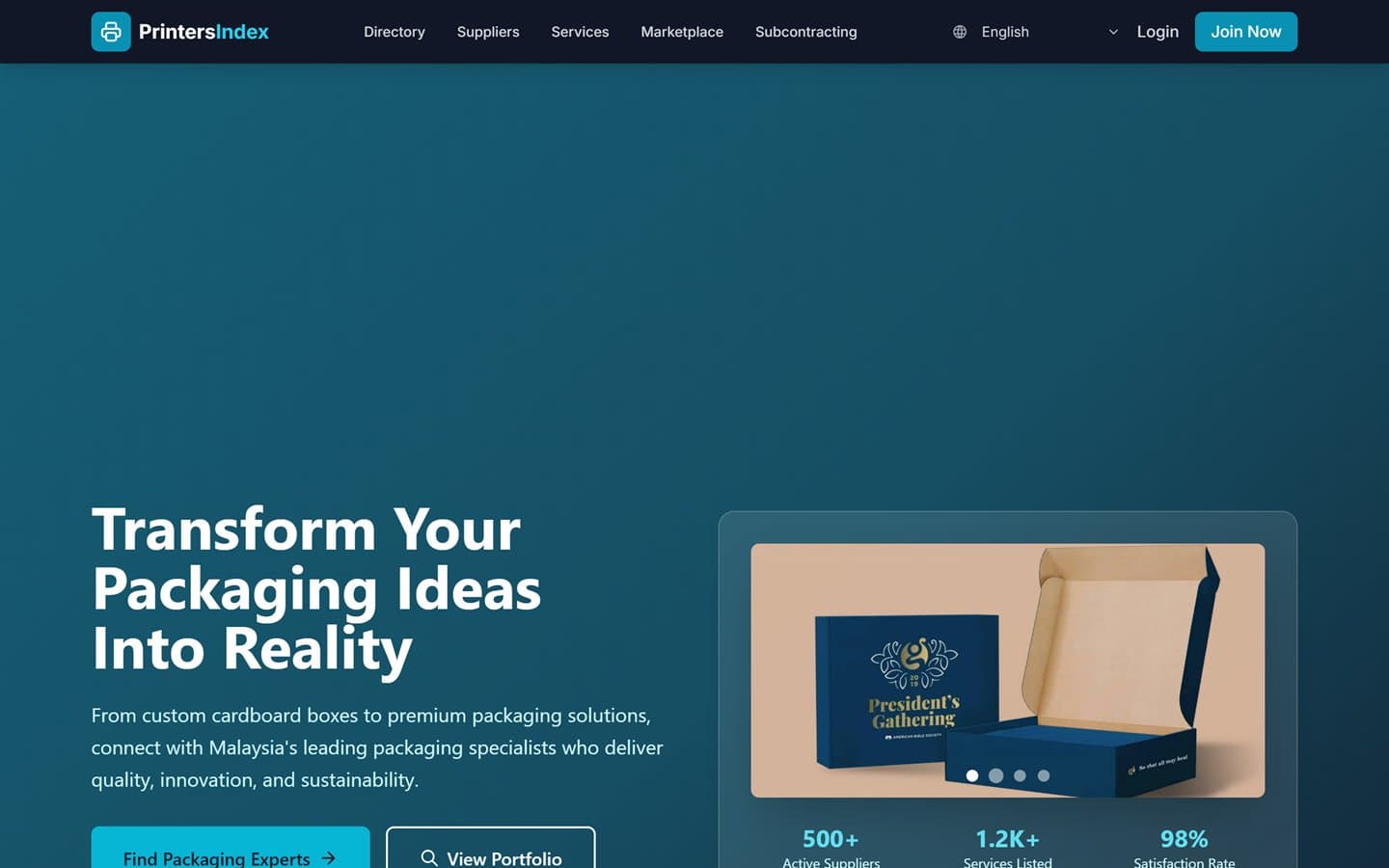
printersindex.com
Print & packagingFlagship
Printers Index
B2B marketplace · Vertical SaaS
Malaysia's index of who prints what — and the platform underneath it.
- 24
- API endpoints
- 20+
- database tables
- 14
- test suites
In production
Most teams build the screens and wire up someone else's engine. We build the engine — print estimating that models plates and spoilage, double-entry ledgers every document posts into, wallet settlement in decimal money, vote chains anyone can verify.
Job
Cost breakdown
RM 0.171 per unit
Imposition
8-up on SRA3 · 2,500 sheets · 3mm bleed
Counted from the source
Not a capability list we aspire to. Each of these exists in production code you can audit.
Print-native quoting that models imposition, parent-sheet fit, plates, make-ready, impressions, ink, per-phase spoilage, binding and finishing — wrapped in order lifecycles, production queues, machine scheduling and dispatch. Four independent platforms deep, including a decades-old Access estimator migrated with parity tests.
General ledgers built into the operational product rather than integrated beside it: chart of accounts, AR and AP, invoices and credit notes, purchase orders, bank reconciliation, fixed assets, period locks, fiscal-year close, and local tax compliance including SST, SST-02 returns and MyInvois e-Invoice.
Two- and multi-sided platforms with verified directories, listings and offers, bidding and job boards, escrow and physical verification flows, disputes and refunds, commission and settlement ledgers, plus the approval and moderation consoles that keep them clean.
Stored-value wallets with P2P transfers, QR and link payments, cash-in and cash-out agent networks, spending limits and passkey step-up — settled through a decimal double-entry money ledger and wired into local rails and gateways rather than one global provider.
Google Gemini in production: vision analysis, function-calling agents holding real business tools, generation flows and voice replies — always behind a server-side proxy limited to fixed operations with locked response schemas, auth guards, per-user rate limits and hard spend caps.
Products designed right-to-left from the first commit instead of retrofitted: Arabic, English, Bahasa Melayu and Chinese locale systems, per-locale routing and hreflang, locale-aware currency and number formatting, bilingual stored content, and Arabic-language AI prompts.
Every figure on these cards is counted from the repository it describes. Open a card for the full breakdown.
B2B marketplace · Vertical SaaS
Malaysia's index of who prints what — and the platform underneath it.

Print MIS · ERP · Estimating
Quote it the way an estimator would. Then run the whole shop on it.

Web-to-print commerce · Print ERP
Sell it, design it, print it, and close the books on it.
Print MIS · Accounting · Tax compliance
Quote a print job by the sheet. Close the books by the ledger.
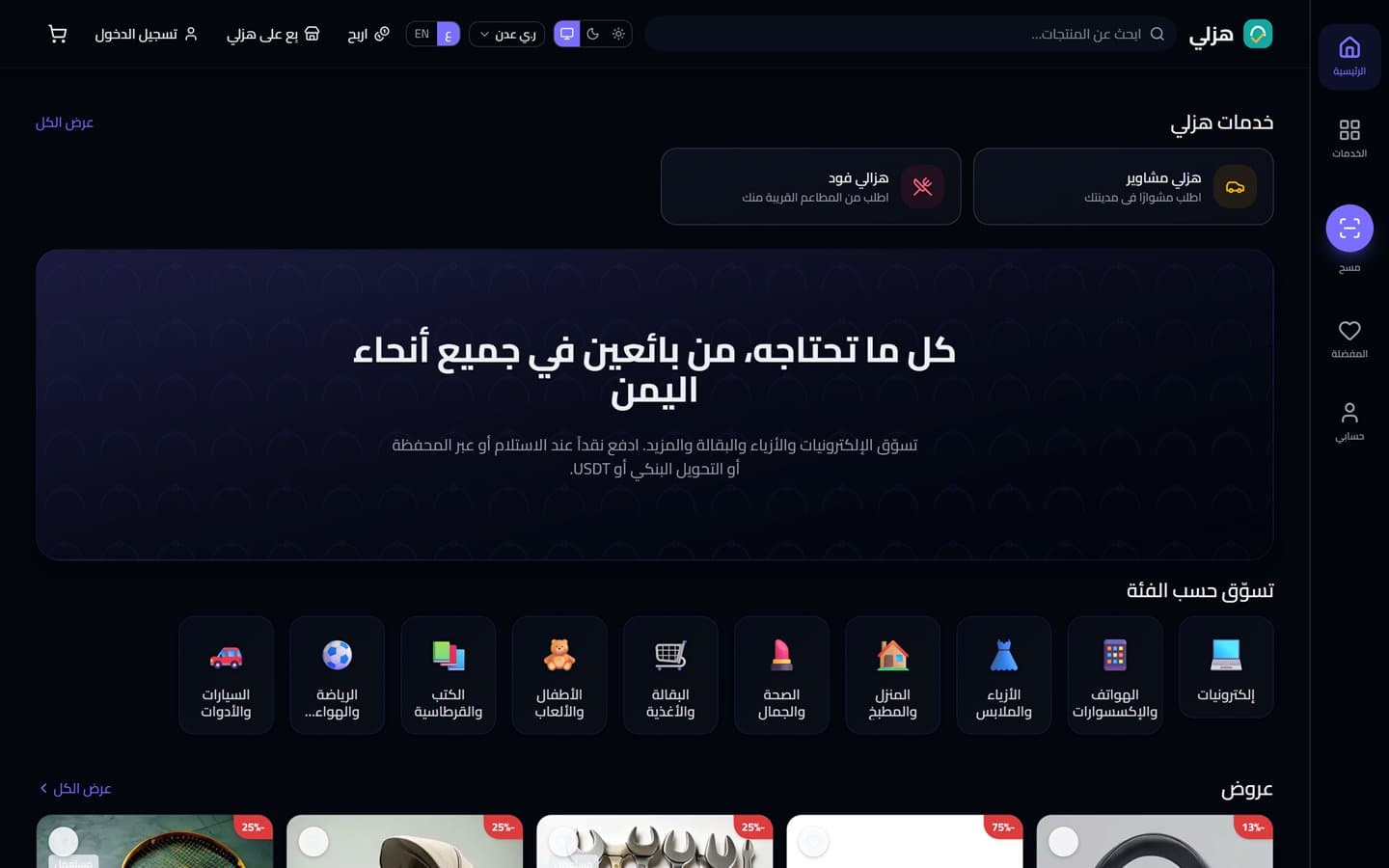
Super-app · Wallet · Marketplace · Mobility
One account, one wallet, four marketplaces for Yemen.

Luxury marketplace · Provenance & trust
Every timepiece, traceable — escrow verification, AI valuation, QR provenance.

Civic tech · Elections & voting
Elections you can verify, not just trust.

AI nutrition · Consumer health
Photograph the meal. Get the plan. Built Arabic-first.
Cross-cutting engineering that shows up in more than one product, because it is how we build rather than what we were asked for once.
The order matters. Building the domain logic before the interface is what keeps the numbers right when the interface changes.
The estimator, the bookkeeper, the dispatcher, the counter staff. We learn the spreadsheet they actually use and the rate book they actually trust, because that is the specification — not the brief.
Costing, imposition, eligibility, settlement — written with no database and no web layer attached, and unit-tested against known-good outputs before a single screen exists.
Each role gets a surface built for its job rather than one dashboard with things hidden. Rules are enforced on the server, so calling the API directly cannot get around them.
Docker, CI, migrations and monitoring from the start — followed by written security and accounting audits with tracked remediation, because the second year is where these systems are judged.
Chosen per problem, not per fashion. Python where a costing engine wants to be plain and testable; Next.js where the product is the web.
Pioneer Digital Technology builds the deep, operationally complex systems most software teams route around. Our anchor domain is commercial printing: four separate platforms covering estimating and imposition, web-to-print commerce, shop-floor production control, and print-shop accounting — including Printers Index, a supplier, subcontracting and equipment marketplace for the Malaysian print trade.
The same discipline runs the rest of the portfolio: a super-app with a stored-value wallet and double-entry ledger, a luxury-watch provenance marketplace, a tamper-evident elections platform, and an Arabic-first AI nutrition app. Every one ships with real domain logic rather than CRUD screens — costing engines, state machines, general ledgers, role-scoped portals and server-enforced rules.
Six of the eight products ship full right-to-left Arabic alongside English, and six embed Google Gemini in production behind auth, quota and schema guardrails. We work with markets in detail — Malaysian SST and MyInvois, Yemeni payment rails — because the compliance detail decides whether software is usable in-country.
If a spreadsheet is holding your pricing together, or your accounting lives in a system that has never heard of a print job, that is the conversation we want.
If a spreadsheet is holding your pricing together, or your accounting lives in a system that does not know what a print job is, that is the conversation we want.
Phone
Office